
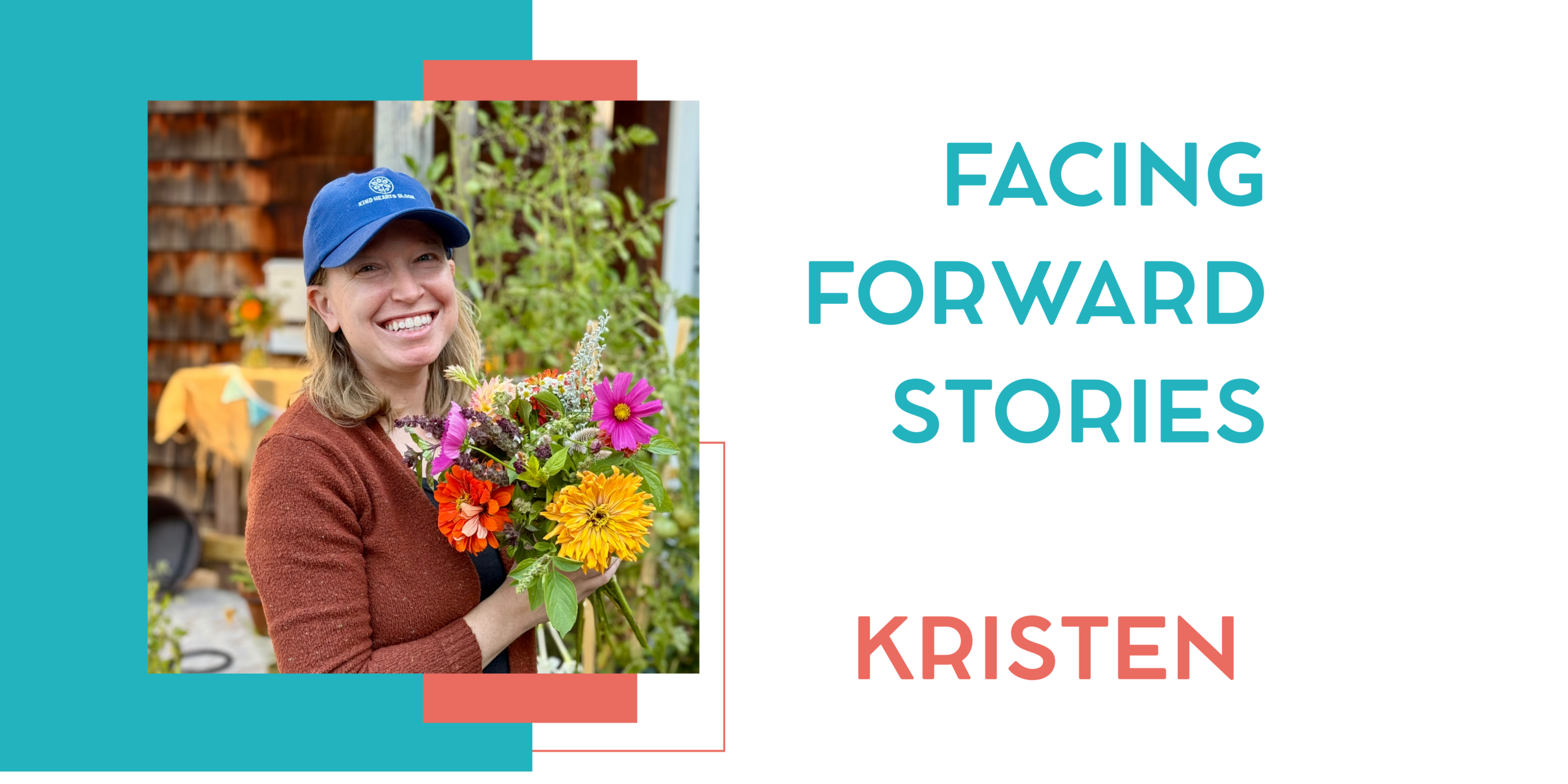
Facing Forward Stories shares real stories from parents and parents-to-be living with chronic illness and disability—highlighting both shared experiences and unique journeys. Through these voices, we offer connection, representation, and encouragement, reminding readers they’re not alone and that there’s no single way to keep facing forward.
After navigating diagnoses of endometriosis and scleroderma, Kristen has learned that parenting with chronic illness isn’t about doing everything—it’s about focusing on what matters most.
In this Facing Forward Story, she shares how embracing flexibility, accepting support, and letting go of perfection helps her raise two daughters while continuing to build meaningful work and a life rooted in purpose.
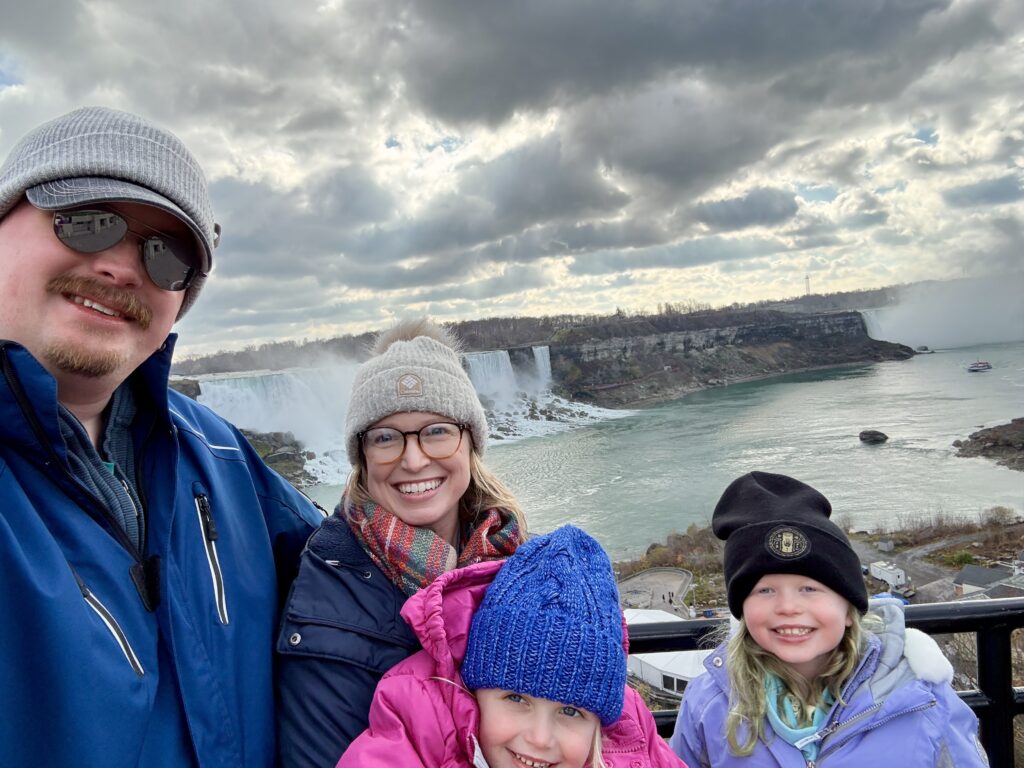
| NAME: Kristen PRONOUNS: She/Her LOCATION: Grand Rapids, MI, USA DIAGNOSES: Scleroderma and Endometriosis CHILDREN: 2; Ages 9 and 6 |
What came first for you: chronic illness diagnosis or parenthood?
I was diagnosed with Endometriosis a few years before we decided to start a family. I required several surgeries and some fertility assistance before I had my daughters. The Scleroderma diagnosis came when the girls were under 4 years old.
What have been the biggest challenges you have faced as a parent or parent-to-be living with chronic illness? How have you adapted to those challenges?
One of the biggest challenges of parenting with chronic illness has been grieving the gap between the parent I imagined I would be and the parent my body sometimes allows me to be.
There have been seasons when pain, fatigue, medical appointments, and surgeries consumed so much of my energy that I worried I wasn’t giving my children the version of me they deserved. Chronic illness has also made me more aware of the fragility of our bodies and the uncertainty that comes with living in one.
Over time, I’ve adapted by letting go of perfection and becoming more intentional about where I spend my energy. I’ve learned that being a good parent isn’t about doing everything – it’s about being present for what matters most.
In some ways, chronic illness has helped me appreciate the small moments more fully. It’s also pushed me to build things that can outlast me – like founding a nonprofit with my friends – so that even on the days my body feels limiting, I can still contribute something meaningful to the world and model resilience for my children.
What does a typical day look like for you and your family? Are there specific tips or systems that help your family function day-to-day?
My kids are school-aged, so much of our routine revolves around school, activities, and the normal rhythms of family life. Running a nonprofit while parenting with chronic illness requires a healthy respect for calendars, naps, and the occasional rescheduling of grand plans.
One of the biggest systems we’ve adopted is prioritizing what matters most and letting go of perfection. We keep our schedules fairly manageable, simplify where we can, and try not to overcommit. I’ve also learned to ask for help when I need it and to take advantage of the days when I’m feeling well rather than assuming every day will be the same.
I think chronic illness has made our family more adaptable. My children understand that sometimes plans change, that rest is important, and that bodies have limits.
It’s not a perfect system, but we’ve learned to build our life around flexibility, grace, and focusing our energy on the people and experiences that matter most.
How do you talk to your children about your illness?
I’ve always tried to be honest with my children in age-appropriate ways. They know that my body works differently than some other people’s and that I have health challenges.
That doesn’t mean it’s always easy.
One of the hardest parts for me is that my illness is often invisible. My kids don’t always see the symptoms, but they do see the effects. There have been plenty of times when they’ve been frustrated that “Mom is always napping” or disappointed when I didn’t have the energy to do something they wanted to do. Those moments can be heartbreaking because, like most parents, I wish I could always say yes.
When those situations come up, I try to explain what’s happening honestly while reminding them that needing rest doesn’t mean I don’t want to be with them. It means I’m taking care of my body so I can continue showing up for our family.
As they’ve gotten older, we’ve had more conversations about the fact that all bodies have strengths and limitations. Mine just happen to be a little more obvious at times. My hope is that they’re learning empathy, adaptability, and the importance of caring for ourselves and others with compassion.
What kind of support has made the biggest difference for you?
Living with chronic illness can be isolating. Having friends, family, healthcare providers, and a therapist who listen without trying to minimize, fix, or explain away what I’m experiencing has been incredibly valuable.
I’ve also been incredibly fortunate to have people in my life who don’t tell me to make my world smaller because of my illness. Instead of talking me out of my dreams or ambitions, they ask how they can help make them possible. That means more than I can put into words.
Before my most recent surgery, friends helped prep gardens and organize things. It was one of those moments where I realized community care looks like love…and also like someone hauling mulch while asking where I want it dumped.
I’ve learned that community isn’t just about receiving help when things are hard. It’s about being surrounded by people who see your potential, believe in what you’re building, and are willing to walk alongside you as you do it.
And finally, I’ve learned that supporting myself matters too. Giving myself permission to rest without guilt, adjusting expectations, and extending myself the same compassion I would offer someone else has been one of the hardest (and most important) lessons of all.
What is something you wish more people understood about parenting with chronic illness?
I wish more people understood that parenting with chronic illness isn’t just hard because of the symptoms themselves – it’s hard because you’re constantly navigating the gap between what you want to do and what your body allows you to do.
Most parents make sacrifices for their children. Parents with chronic illness often add a surprising amount of logistical planning to the mix. There are days when deciding whether I have enough energy for an outing feels like a math problem nobody taught me how to solve.
I also wish people understood that needing accommodations, rest, or support doesn’t mean we’ve given up on our goals. Some of the most determined, creative, and resilient people I know are living with chronic illness. We aren’t looking for pity – we’re looking for understanding and the opportunity to participate fully in our families and communities.
If you could go back to the day of your diagnosis, what would you tell yourself?
I would tell myself that life is going to be different than you planned, but different doesn’t mean any less fulfilling. It also doesn’t mean you’ll stop acquiring hobbies. In fact, you may accidentally start a nonprofit because you decided to grow some flowers in your front yard.
There will be seasons of grief, frustration, fear, and uncertainty. There will be times when you feel like your body has betrayed you and times when you wonder what your future will look like.
But I would also tell myself that this diagnosis will not take away your ability to love deeply, raise wonderful children, build meaningful relationships, pursue ambitious goals, or make a positive impact in the world.
In many ways, chronic illness will force you to become more intentional. It will teach you to pay attention to what truly matters, to accept help, to appreciate ordinary moments, and to recognize that none of us accomplish meaningful things entirely on our own.
Most of all, I would tell myself to stop waiting for a version of life without limitations to begin living fully.
What does “facing forward” mean to you?
To me, “facing forward” means choosing to keep living in the direction of life, even when the past has included pain, uncertainty, or loss.
It also means choosing to build something with what I’ve lived through. For me, that has looked like planting flowers during a season of recovery, turning difficult experiences into essays, and eventually creating the nonprofit, Kind Hearts Bloom, as a way to help others experience connection and belonging in their own neighborhoods.
“Facing forward” doesn’t mean everything is easy or resolved. It means I’m no longer waiting for a different body or a different life to begin living fully. It means I’m here, participating, contributing, and staying open to what can grow from where I am.
I’m still facing forward, even when it looks more like “wandering in the right direction” somedays.
Here’s where you can connect with Kristen online!
- Website: Kind Hearts Bloom
- Instagram: @kristen.freeland & @KindHeartsBloom
| 🌿 Facing Forward Moments: Kristen’s Recent Parenting WIN! 🌿 Our win has been involving my youngest in the garden in a way that actually increased her willingness to try new foods – which, in our house, feels like a minor miracle. She has a very short list of vegetables she will eat. This year, instead of trying to persuade her with logic or stealth vegetable strategies, I asked her to help choose what we would grow based on what she might be willing to taste. In the spring, she surprised me by deciding she liked sugar snap peas and even broccoli flowers (though specifically not the florets, which she made very clear are a different category entirely). For summer, she picked “berry tomatoes,” mini sweet peppers, and a pink variety of potato. The win isn’t that she suddenly eats everything – it’s that she’s curious. She checks the plants, asks questions, and occasionally tries something she chose herself. It turns out the garden works better as an invitation than a negotiation. |
💛 Want to share your own story? Send an email to: info @ mamasfacingforward.com
💬 Join our community: Mamas Facing Forward Facebook group
