
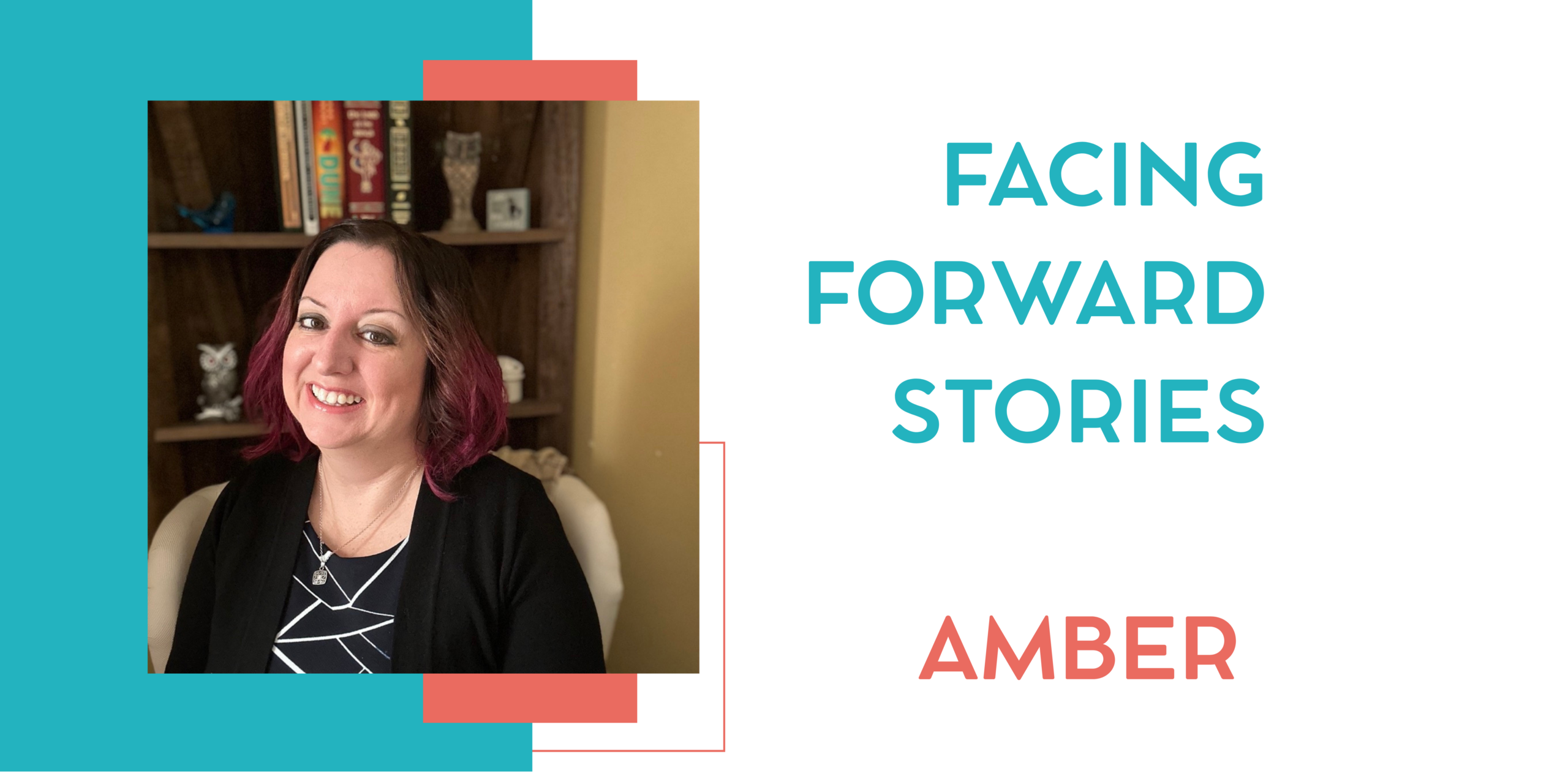
Facing Forward Stories shares real stories from parents and parents-to-be living with chronic illness and disability—highlighting both shared experiences and unique journeys. Through these voices, we offer connection, representation, and encouragement, reminding readers they’re not alone and that there’s no single way to keep facing forward.
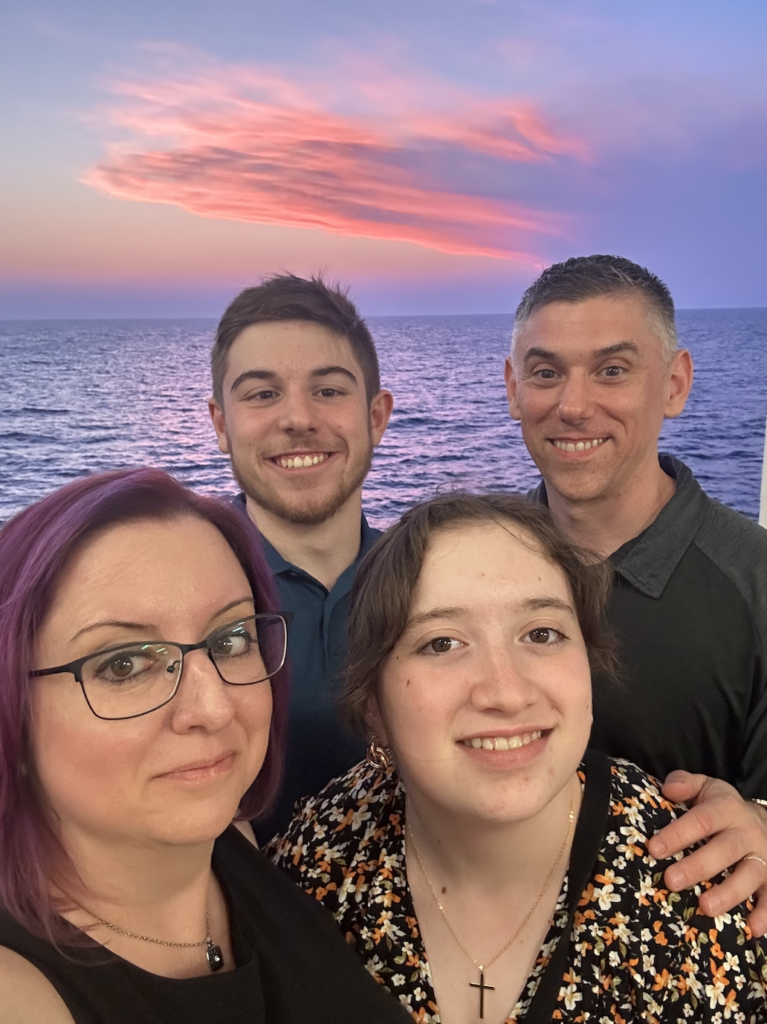
Amber is a writer, advocate, and mother of two from Connecticut living with ulcerative colitis and IBD. In this interview, she shares the realities of raising children while navigating chronic illness—from adapting family routines around fluctuating energy levels to finding practical ways to balance parenting, work, and self-care.
Through it all, Amber’s story is a reminder that parenting with chronic illness may look different, but it can still be deeply connected, joyful, and fulfilling.
| NAME: Amber PRONOUNS: she/her LOCATION: Connecticut, USA DIAGNOSES: ulcerative colitis/IBD CHILDREN: two children: 16 and 19 |
What came first for you: chronic illness diagnosis or parenthood?
Parenthood.
What have been the biggest challenges you have faced as a parent or parent-to-be living with chronic illness? How have you adapted to those challenges?
The biggest challenge over the years has been with my energy level. There have been times when dinner is takeout in the living room with a movie. Or, a day is spent doing quieter activities at home, where I can easily sit down or rest. But I don’t think my kids would say these times were a problem for them! They probably got more of me and my attention when I am feeling tired than when I’m feeling more energetic, and we go to the beach or go bowling, for instance.
The second-biggest challenge, which resolved itself once my kids were old enough to be by themselves for a few minutes, was public restrooms. There were times when I had one kid strapped to my front or my back, and I was holding another by the hand, while looking for a bathroom stall big enough to fit all of us. We really didn’t go places without good bathroom access until they were older. I don’t think it limited us much, but it was something I was aware of that I don’t think other young mothers would consider.
What does a typical day look like for you and your family? Are there specific tips or systems that help your family function day-to-day?
The funny thing is, there’s no typical day in my house! I will say that most days I’m working in my office for at least part of the day. In the summer, I would try to take the kids out to a fun activity in the morning and then work in the afternoon when they were either napping or having quiet time. As they got older and went to school, a typical day would be school/work, after-school activities, and then dinner together. With few exceptions, the one daily activity that we prioritize is dinner together at the table, with no distractions, and discussing the events of the day and the plans for the next day.
How do you talk to your children about your illness?
I’ve talked with my kids in little bits here and there over the years. There’s probably not a time when they didn’t know that I approached life differently because of the IBD and my j-pouch. I never sit my kids down for a discussion: most topics come up in an organic way, while driving or over dinner, or while doing chores around the house. They now have access to my social media, so they see what I discuss and what I post there.
What kind of support has made the biggest difference for you?
The support of friends and family who not only show up when I ask, but also offer to help. It’s not common for me to need anything in particular, but I know that there are several people that I can call and they’d make space for me and for my kids.
What is something you wish more people understood about parenting with chronic illness?
I wish more people understood that parenting is really physical, and there are times when chronic illness gets in the way of the things we want to do. I want to be the mom who shows up for everything and volunteers everywhere, but I just don’t have the stamina for it. I pick and choose the things that I know I can do without wearing myself out.
If you could go back to the day of your diagnosis, what would you tell yourself?
I would tell myself that it’s going to be OK. It didn’t occur to me that research and science in medicine march forward, and that there would be a better understanding of IBD and treatments coming. I guess I thought because there wasn’t much available when I was diagnosed, or in the decades prior, that it would always be that way. Now IBD is having a minute, and there’s more on offer for us, much more than I ever dreamed possible.
What does “facing forward” mean to you?
To me, facing forward means acknowledging the realities of living with an illness. I don’t work against myself anymore; I accept what’s happening, do my best to live within my capacity, and leave everything else behind me.
Here’s where you can connect with Amber online!
- Website: AboutIBD.com
- VeryWell: Inflammatory Bowel Disease
- Facebook: About IBD
- Twitter: @AboutIBD
- Instagram: @about_ibd
- YouTube: About IBD Podcast
- Threads: About IBD – Amber
- BlueSky: Amber – About IBD
| 🌿 Facing Forward Moments: Amber’s Recent Parenting WIN! 🌿 My son is completing his first year in college, and it has been a success, I think at least in part because of the ways we taught him to be independent and to think for himself. |
💛 Want to share your own story? Send an email to: info @ mamasfacingforward.com
💬 Join our community: Mamas Facing Forward Facebook group
✍️ Read Amber’s article: Ostomy Myths: Busted!
