
Facing Forward Stories shares real stories from parents and parents-to-be living with chronic illness and disability—highlighting both shared experiences and unique journeys. Through these voices, we offer connection, representation, and encouragement, reminding readers they’re not alone and that there’s no single way to keep facing forward.
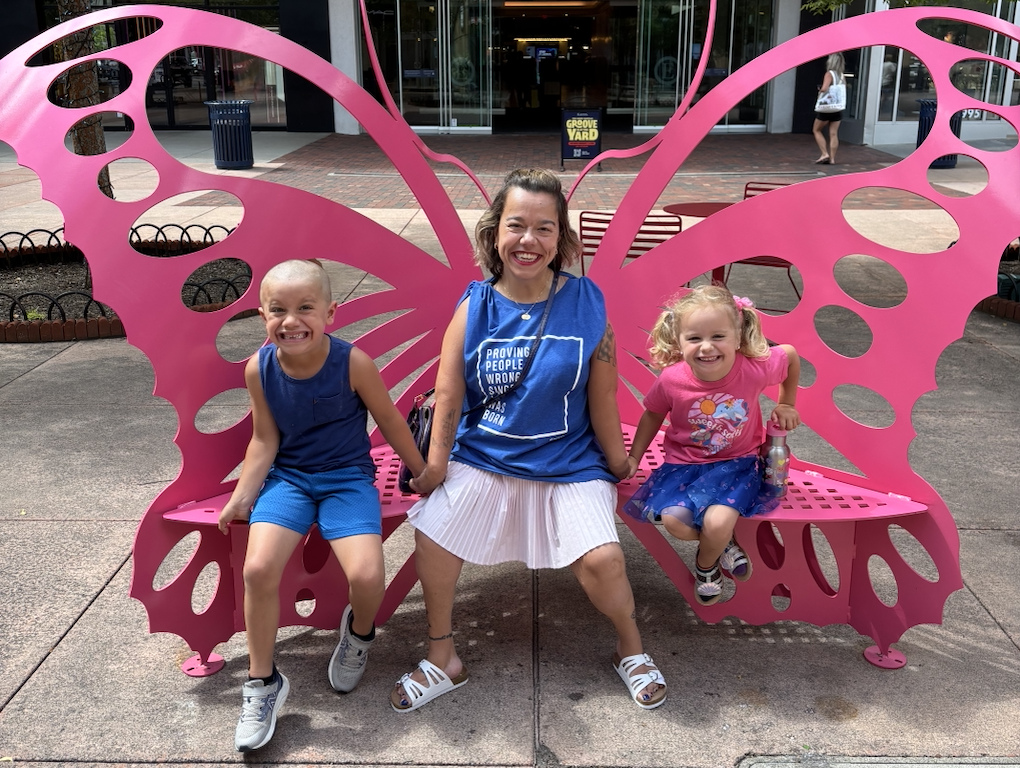
Kyrzia’s story is a powerful reminder that parenting isn’t defined by doing everything—it’s defined by showing up with love, adaptability, and grace.
She shares how she has challenged internalized ableism, embraced support, and redefined what it means to be a “good mom,” and how these shifts have helped her build a joyful family life while living with arthrogryposis.
| NAME: Kyrzia PRONOUNS: She/her LOCATION: Castle Rock, CO DIAGNOSES: Arthrogryposis CHILDREN: 2 children (Deklan 6 years old and Frankie 3 years old) |
What came first for you: chronic illness diagnosis or parenthood?
Disability.
What have been the biggest challenges you have faced as a parent or parent-to-be living with chronic illness? How have you adapted to those challenges?
The biggest challenge has been myself. I was born with my disability and find that I’ve spent a majority of my life prescribing to some core beliefs rooted in ableism. Spending a lot of time trying to prove to others I could do things rather than just let myself be. One of the biggest ways this showed up was breastfeeding.
Breastfeeding was difficult for me. Not only was I a low supplier, my disability impacts my arms and hands. It was tough all the way around and I spent so much time triple feeding and pumping 12 hours a day that I missed just quiet moments with my kids as babies. I know most of my obsession with breast feeding was that I felt it was “my way” to contribute. Due to my disability I wasn’t the main diaper changer; I didn’t get up and get them in the middle of the night. I often felt less than as a mom. So I clung to breast feeding like it was proof I was a “good mom.”
Looking back I don’t have too much judgement on myself. I cared a lot and worked hard to do what I felt was best for my baby at the time. I also now know my babies didn’t care how they were fed and just wanted a present happy mom.
What does a typical day look like for you and your family? Are there specific tips or systems that help your family function day-to-day?
A typical day starts with my partner helping me get ready before the kids wake up, and then we get the kids up together. My kids have learned to do what they can for themselves and I’ve found this to be something they like and are proud of.
Once the kids go to school, I work from home all day. When I have a break and the weather is good I’ll take them or pick them up from school with my wheelchair and they can ride with me. I tend to do a lot of the invisible work in the house: making doctors appointments, making sure we know what activities are coming up, planning meals etc. while my partner does a lot of the physical work: taking them to appointments, packing bags, cooking the dinner.
We try to eat at the dinner table together but sometimes my bottom needs a break so we’ll have “living room picnics” where we eat on the couch and I can lay down. After activities / dinner we start bedtime routines and put the kids to bed. Most nights once the kids go down I catch up on work, have a friend come over to watch some TV, or watch a movie with my partner. We have planned nights that try to balance alone time, separate time, together time and also time where he helps me with different things.
How do you talk to your children about your illness?
I tell them everybody is born different – some just look it more than others. When they ask me how I feel about my body, I’m sure to remind them that I feel many things about my body but most of all I’m grateful because it grew them. As they get older I think we will talk more about how two things can be true at once like gratitude and grief.
What kind of support has made the biggest difference for you?
Finding other moms with similar stories has been really helpful. Also physical help in person is huge. When a friend volunteers to come over and clean out my kids’ closet or another physical activity that would take me so much longer to do by myself.
What is something you wish more people understood about parenting with chronic illness?
At the end of the day it doesn’t really matter how we do things – just as long as we have happy (relatively depending on the day and our kids ages 😅), healthy (also depending on what that means for us), loved kids.
If you could go back to the day of your diagnosis, what would you tell yourself?
Well it was the day I was born so I had a lot going on but if I could go back to the day I realized I was disabled I would say: “Take a deep breath. Things will be hard and they will be beautiful. A full life is waiting for you. You just have to believe you deserve it.”
What does “facing forward” mean to you?
Putting one foot (or wheel) in front of the other. Letting yourself grieve. Letting yourself believe in yourself. Letting yourself continue to evolve.
Here’s where you can connect with Kyrzia online!
- Instagram: @kyrziaparker
| 🌿 Facing Forward Moments: Kyrzia’s Recent Parenting WIN! 🌿 My kids recently went to a conference with me for my disability and they were so kind and real with the other kids. Knowing and loving me increased their capacity to know and be loving to other kids who looked different from them. |
💛 Want to share your own story? Send an email to: info @ mamasfacingforward.com
💬 Join our community: Mamas Facing Forward Facebook group
