
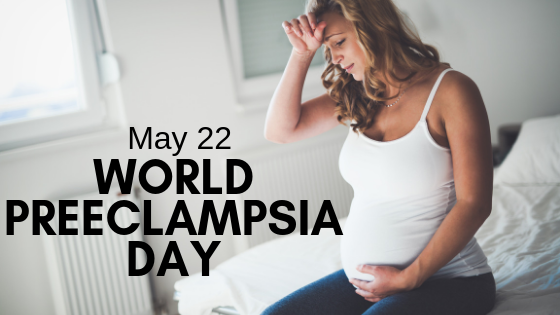
Join us this May as we honor Preeclampsia Awareness Month, a month-long communication campaign to raise awareness of this life-threatening hypertensive disorder of pregnancy.High blood pressure can happen to any woman in any pregnancy or the postpartum period. It is a leading cause of maternal and infant illness and death worldwide.
Preeclampsia Foundation
May 22 is World Preeclampsia Day. If you’re pregnant, or plan to become pregnant, or know anyone who ever might – take a few minutes today to learn the symptoms of preeclampsia. Some chronic illnesses can increase a woman’s chances of preeclampsia, so it’s particularly important to know what to look for in those cases! And despite the “pre,” it’s important to recognize that preeclamspia can also happen after birth!
KEY STATISTICS ABOUT PREECLAMPSIA
- Hypertensive disorders of pregnancy (HDPs) complicate 5-10% of all pregnancies worldwide. They include: preeclampsia (with or without severe features), eclampsia (seizures), HELLP syndrome (hemolysis, elevated liver enzymes, low platelets), and gestational hypertension.[i]
- Preeclampsia is most often characterized by a rapid rise in blood pressure that can lead to seizure, stroke, multiple organ failure, and death of the mother and/or baby.
- HDPs are a leading cause of maternal and infant death worldwide[ii], with the majority of these deaths happening in low- and middle-income countries (LMICs).
- Approximately 76,000 women and 500,000 babies die each year worldwide.[iii]
- The United States currently ranks 47th worldwide for maternal mortality, and is the only industrialized nation with a rising maternal mortality rate.[iv]
- HDPs, including preeclampsia, are a leading cause of maternal and infant illness and death here in the United States.[v]
- Black women experience severe maternal morbidity events at a rate 2.1 times greater than white women.[vi]
- 60% of hypertension-related maternal deaths are potentially preventable — there continue to be missed opportunities for appropriate, recommended care of severe maternal hypertension.[xvii]
You can learn more at the Preeclampsia Foundation.
