
Close Menu
  • Home
  • About
  • Family Planning
    • Genetics & Inheritability
    • Medication Considerations
    • Trying to Conceive (TTC)
    • Alternative Parenthood Paths
  • Pregnancy
    • Managing Pregnancy
    • Childbirth
    • Breastfeeding
    • Postpartum
    • Preparing for Baby
  • Kids
    • Baby
    • Toddler
    • Big Kids
    • Children’s Book Reviews
    • Teens
    • Supporting Disability
  • Living
    • Facing Forward Stories
    • Awareness & Mental Health
    • Relationships & Intimacy
    • Home & Holidays
    • Money & Work
    • Travel
    • Single Parenting
Facebook X (Twitter) Instagram
Mamas Facing Forward
  • Home
  • About
  • Family Planning
    • Genetics & Inheritability
    • Medication Considerations
    • Trying to Conceive (TTC)
    • Alternative Parenthood Paths
  • Pregnancy
    • Managing Pregnancy
    • Childbirth
    • Breastfeeding
    • Postpartum
    • Preparing for Baby
  • Kids
    • Baby
    • Toddler
    • Big Kids
    • Children’s Book Reviews
    • Teens
    • Supporting Disability
  • Living
    • Facing Forward Stories
    • Awareness & Mental Health
    • Relationships & Intimacy
    • Home & Holidays
    • Money & Work
    • Travel
    • Single Parenting
Mamas Facing Forward
You are at:Home»Living»Explaining Chronic Illness»November is National Diabetes Month

November is National Diabetes Month

0
By Editor on November 1, 2026 Explaining Chronic Illness

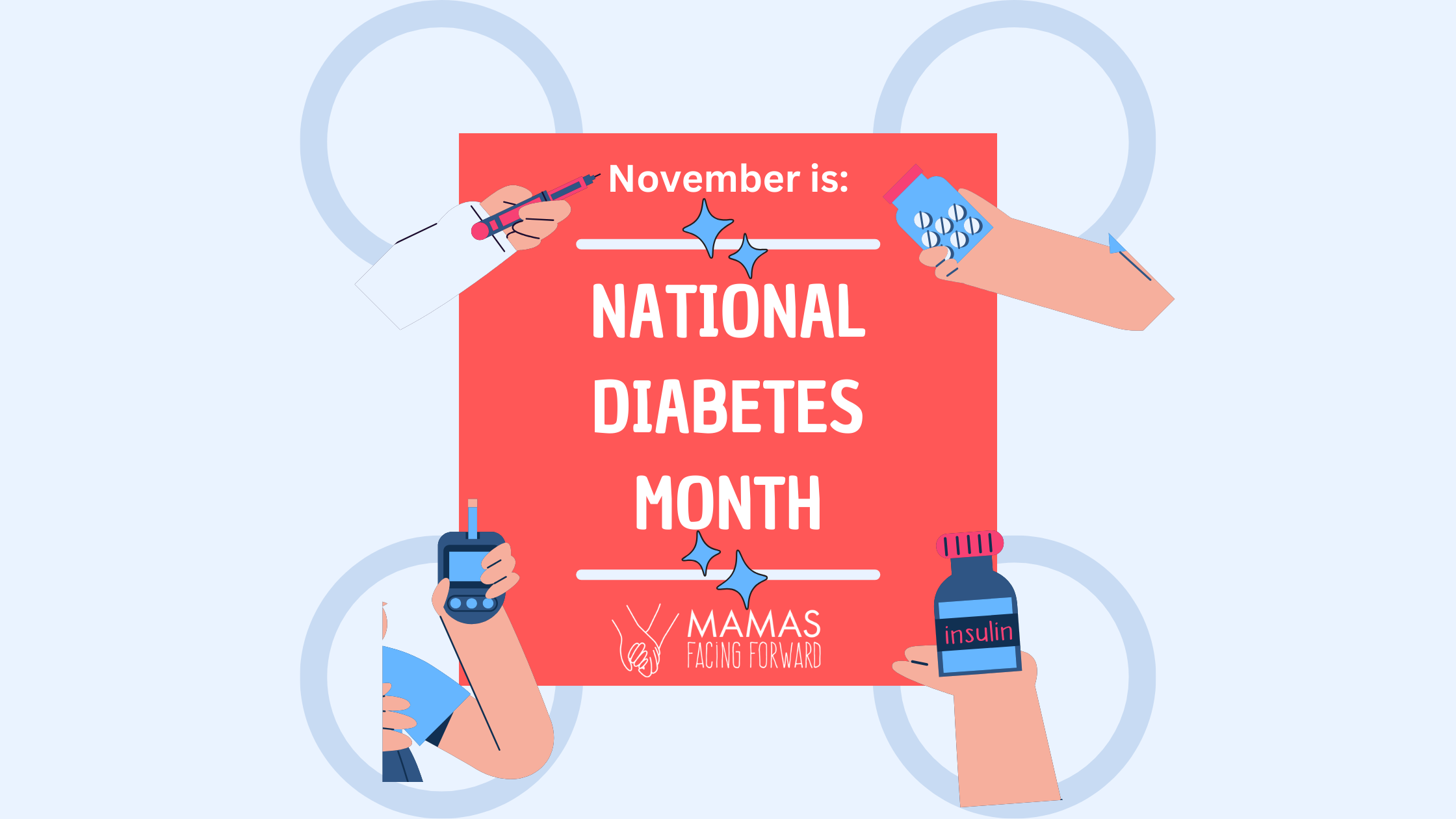
November is National Diabetes Month, a time when communities across the country seek to bring attention to diabetes. This year’s focus is on taking action to prevent diabetes health problems.

National Institute of Diabetes and Digestive and Kidney Disease

There are several types of diabetes, including: Type 1, Type 2, and gestational diabetes.

Type 1 diabetes impacts 1.25 million Americans, and can occur at any age, in people of every race, shape, and size. In this type of diabetes, the body does not produce insulin, so insulin therapy is generally needed to manage the condition.

Type 2 diabetes is the most common form of diabetes. In Type 2, the body doesn’t use insulin properly, and while some people may be able to control blood sugar levels with healthy eating and exercise, others may need medication or insulin to manage their condition.

Gestational diabetes happens to millions of women while pregnant. While it doesn’t mean you had diabetes before pregnancy or that you will have diabetes after pregnancy, treatment is necessary to keep mom and baby healthy.

Take some time this month to learn more about the different types of diabetes. You can learn more at the Mayo Clinic or the American Diabetes Association.

Share. Facebook Twitter Pinterest LinkedIn Tumblr Email
Editor
  • Website
  • Facebook
  • Instagram

Designed as a companion to your healthcare provider's advice, Mamas Facing Forward endeavors to provide resources, encouragement, and community for parents and parents-to-be living with chronic illness.

Leave A Reply Cancel Reply

Quick Links
  • Home Page
  • About
  • Family Planning
  • Pregnancy
  • Kids
  • Living
Terms

© 2018 Mariah Leach: Mamas Facing Forward. All rights reserved. This information is not designed to replace a physician’s independent judgment. Always consult your doctor about your medical conditions. MamasFacingForward.com does not provide medical advice, diagnosis, or treatment. Use of the site is conditional upon your acceptance of our terms of use.

Facebook Instagram
© 2026 ThemeSphere. Designed by ThemeSphere.

Type above and press Enter to search. Press Esc to cancel.